

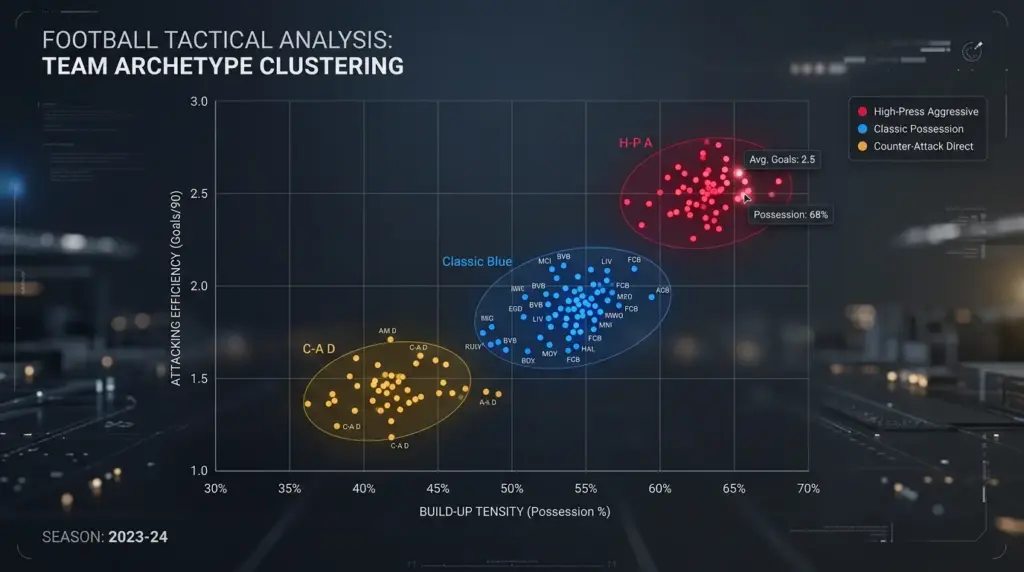
Analyzing the tactical setups of Premier League managers during the historic 2011/2012 season reveals a deep correlation between a coach’s philosophical rigidity and their team’s predictability in specific matchups. While standard statistical models heavily emphasize recent form and basic goal metrics, they frequently overlook the underlying structural mechanics that govern how two distinct tactical systems interact. By breaking down the specific strategic paradigms implemented during this legendary campaign, analytical observers can identify structural imbalances where one manager’s blueprint systematically dismantles another, providing a much higher degree of certainty when selecting a side.
Why Technical Adaptability Outperformed Strict Tactical Ideology in 2011/12
The 2011/2012 Premier League season marked a transitional era where traditional British directness clashed aggressively with imported European possession structures. Managers who relied on a singular, unyielding tactical template frequently found themselves vulnerable once opponents mapped out their passing lanes and pressing triggers. This structural friction meant that teams with highly predictable build-up phases often struggled against tactical pragmatists who tailored their defensive blocks specifically to exploit the ideological blind spots of their opponents.
Decoupling Mancini’s Fluid Possession Mechanics from Ferguson’s Direct Transition System
The title race between Roberto Mancini’s Manchester City and Sir Alex Ferguson’s Manchester United serves as a masterclass in how contrasting tactical philosophies impact consistency. Mancini favored an intricate, narrow midfield setup that relied on creative orchestrators shifting inside from wide positions to overload the central zones. This method prioritized structural control and sustained territorial dominance, exhausting opponents by forcing them to shift laterally for long periods.
The Contrast of United’s Asymmetrical Wing Play
Sir Alex Ferguson countered the tactical evolution of the league by maintaining a highly dynamic, transition-oriented 4-4-2 variant that maximized vertical speed. United focused on exploiting space out wide through explosive wingers who could deliver early crosses or cut inside to support a mobile strike partnership. This system prioritized structural velocity over patient possession, aiming to strike opponents before their defensive lines could drop into a compact low-block.
Mapping Tactical Counters to Predict Mid-Table Upsets
Predicting outcomes outside the traditional elite elite bracket requires a thorough understanding of how mid-table managers organized their defensive shapes against high-pressing systems. For instance, Tony Pulis at Stoke City perfected a highly physical, low-block defensive system that completely bypassed midfield pressing traps by utilizing direct long balls to a target man. When an opponent’s tactical identity relied heavily on winning possession in the middle third, facing Stoke’s direct approach neutralized their primary defensive weapon, consistently leading to disrupted rhythms and unexpected dropped points for the favorites.
Evaluating these match-ups through a strictly structural lens allows analysts to identify sharp discrepancies between public perception and actual tactical reality. When the market prices a match based on brand reputation rather than the underlying tactical clash, astute observers can find substantial value by backing the strategically favored side. If an analytical model indicates that a defensive setup is perfectly built to stifle an opponent’s specific build-up pattern, executing an informed wager becomes highly logical. Under situational conditions where a standard bookmaker’s lines fail to reflect these clear stylistic advantages, choosing an advanced web-based service like @ufa168 gives astute analysts the necessary depth and market flexibility to back their tactical readings before the general public catches on.
The Failure of André Villas-Boas’s High Defensive Line at Chelsea
The brief tenure of André Villas-Boas at Chelsea during the 2011/2012 season provides a clear case study in what happens when a manager imposes an aggressive tactical framework without the appropriate profiles on the pitch. Villas-Boas attempted to implement an intense, high-pressing block coupled with an aggressively high defensive line designed to compress the playing field. However, because his central defenders lacked the recovery pace required to defend large expanses of open space behind them, opponents with quick, vertical forwards ruthlessly exposed Chelsea on the counter-attack.
How Squad Depth Shapes Tactical Execution Under Midweek Congestion
A manager’s tactical intent is only as effective as the physical capabilities of the players required to execute it over a grueling multi-competition schedule. High-energy systems that demand relentless pressing and rapid transitions inevitably deteriorate when a thin squad faces heavy fixture congestion.
1.Physical Fatigue Settles In:Weeks 1–3 of Congestion.
Continuous midweek matches deplete the squad’s energy reserves, causing players to arrive late to pressing triggers and allowing opponents to bypass the first line of defense with ease.
2.Compromised Defensive Distances:Weeks 4–5 of Congestion.
As physical exhaustion impacts mental sharpness, the structural distances between the midfield and defensive lines begin to widen, creating massive gaps in the half-spaces.
3.Forced Personnel Rotation:Weeks 6+ of Congestion.
The manager is forced to introduce secondary players who lack the technical proficiency or tactical familiarity required to maintain the primary tactical system.
4.Total Systemic Breakdown:Match Day Execution.
The team abandons the intricate tactical blueprint out of sheer survival instinct, reverting to a reactive, low-intensity block that surrenders territorial control to the opposition.
The sequential degradation detailed in the breakdown above demonstrates why backing high-intensity pressing teams during festive periods or European knockout stages is a highly risky proposition. When analyzing these situations, a sharp observer must look past a manager’s ideal philosophy and evaluate the actual physical capacity of the remaining fit squad members.
Evaluating the Strategic Resilience of Alan Pardew’s Newcastle United
Newcastle United’s surprising push for a top-five finish under Alan Pardew during the 2011/2012 season offers an excellent example of maximizing a highly specific tactical match-up. Pardew recognized that his midfield possessed exceptional physical presence and direct passing ability, which allowed them to quickly feed an incredibly clinical strike partnership of Demba Ba and Papiss Cissé. Rather than trying to dominate possession against technical sides, Newcastle happy surrendered the ball, drawing opponents forward before hitting them with lethal, vertical combinations that exposed unbalanced defensive transitions.
Identifying the Break Point Where Tactical Rigidness Triggers Severe Losses
While a clear tactical identity provides long-term stability, a complete lack of a backup plan represents a major structural hazard that can lead to catastrophic results against elite opposition. Managers who refuse to drop their defensive lines or adjust their build-up patterns when facing superior technical squads often suffer massive blowout defeats. Tracking a manager’s history of adjustments during match crises reveals whether they possess the pragmatic flexibility to salvage a point, or if their stubborn commitment to an ideal will cause them to sink with their ship.
Observing how these tactical breaking points develop in real-time offers an exceptional advantage to those tracking matches live as the action unfolds. When a rigid manager refuses to adjust a failing system by the hour mark, the probability of a multi-goal concession increases exponentially. In contrast to making selections prior to kickoff, watching these strategic flaws play out live allows an analyst to strike at the perfect moment. For observers who specialize in identifying these unfolding tactical disasters, monitoring the live shifts inside an interactive sports betting service provides an ideal environment to capitalize on a manager’s refusal to adapt before the match gets completely out of hand.
Summary
The 2011/2012 Premier League season demonstrated that parsing a manager’s tactical framework is essential for making accurate, value-driven match selections. By contrasting possession-based models with direct transition systems, tracking how fixture congestion alters tactical execution, and recognizing the structural vulnerabilities of rigid tactical systems, analysts can look past basic surface metrics. Ultimately, understanding how two tactical philosophies collide on the pitch provides a highly reliable blueprint for predicting which side will dictate the match and secure the result.
