

You’re halfway through a flight, the cabin is calm, and then the floor seems to drop out from under you. Your drink ripples, your stomach lurches, and your mind races to the worst-case scenario. For millions of travellers, turbulence is the single biggest trigger of flight anxiety. Understanding what is actually happening can take much of the fear out of it.
If bumpy air leaves you dreading your next trip, you’re far from alone. Many Australians who feel this way find that education and structured support make a real difference, and professional fear of flying treatment in Sydney can help you replace panic with practical skills and confidence. But first, let’s look at what turbulence really is.
So, What Is Turbulence?
Turbulence is simply irregular movement of air. Planes fly through the atmosphere, which behaves a lot like a fluid. Just as a boat rocks over waves or a river flows unevenly around rocks, an aircraft bumps along when it meets currents of air moving at different speeds and directions.
The sensation feels dramatic because you can’t see it coming. But to the aircraft, it’s an everyday part of flying, much like a bumpy stretch of road is for a car.
The Main Types of Turbulence
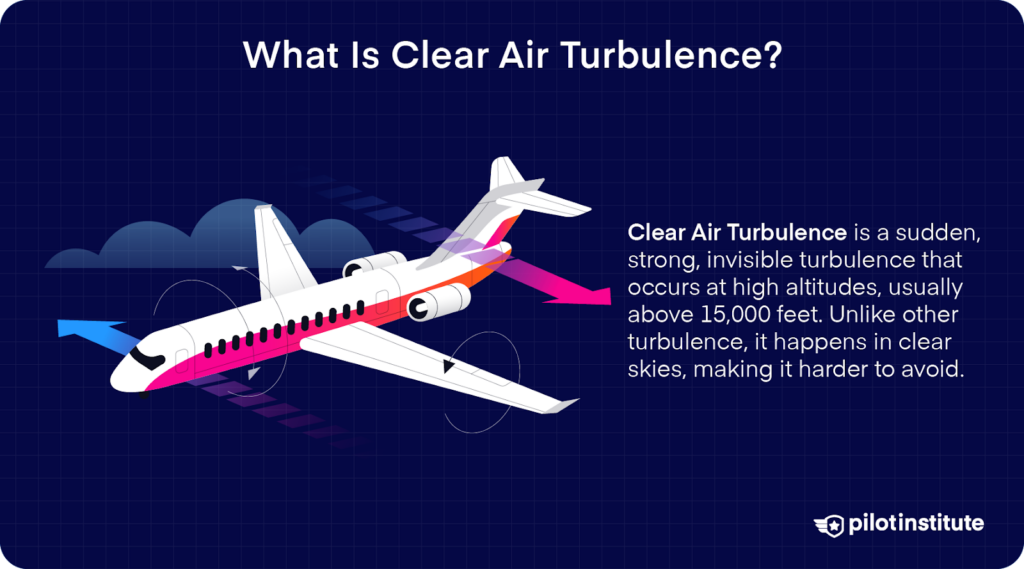
Clear-air turbulence occurs in cloudless sky, often near jet streams, where fast-moving air meets slower air.
Convective turbulence comes from rising warm air and storm clouds. Pilots can usually see these areas on weather radar and route around them.
Mechanical turbulence happens when wind flows over mountains, hills, or buildings, most often during take-off and landing.
Wake turbulence is caused by the air disturbed behind another aircraft. Air traffic control keeps planes spaced to avoid it.
Why the Plane Isn’t in Danger
Here’s the reassuring part: aircraft are engineered to handle far more than turbulence will ever throw at them. Before a new aircraft type enters service, its wings are tested by bending them well beyond the loads they’d ever experience in flight. The wings are designed to flex, and if you watch them during a bumpy patch, you’ll see them move up and down. That flexing is the wings doing exactly what they were built to do, absorbing energy so that you don’t feel even more.
Turbulence also doesn’t make a plane “fall.” The sudden drops you feel are typically only a few metres to perhaps a few dozen metres. At 35,000 feet, that’s a tiny movement, and the aircraft remains firmly supported by the air beneath its wings. Planes can’t plummet out of the sky because of a pocket of rough air.
What the Pilots Are Doing
Flight crews are trained extensively for turbulence. Before and during the flight, they receive weather forecasts and turbulence reports from other aircraft. They can adjust altitude or route to find smoother air, and they slow the aircraft to a recommended “turbulence penetration speed” that reduces stress on the airframe.
When the seatbelt sign comes on, it isn’t a sign of an emergency. It’s a precaution, like a driver warning passengers before a rough road. Crew members are calm because they know this is routine.
Where the Real Risk Lies
It’s worth being honest: turbulence can cause injuries, but almost always to people who aren’t wearing a seatbelt when it hits. Bumped heads and bruises happen when passengers or crew are standing or unbuckled. The simple, effective solution is to keep your seatbelt fastened whenever you’re seated, even when the sign is off.
Serious accidents caused by turbulence in modern commercial aviation are exceptionally rare. Aviation safety is built on layers of redundancy, rigorous training, and decades of accumulated data, which is why commercial flying remains one of the safest ways to travel.
Why It Feels So Scary
If the facts are so reassuring, why does turbulence still feel terrifying? The answer is psychological. Our brains rely on a sense of control and predictability. In a plane, we have neither, and unexpected motion triggers the body’s threat response: a racing heart, tense muscles, shallow breathing. Those physical sensations then convince the mind that something must be wrong, creating a cycle of fear.
The good news is that this cycle can be interrupted. People who struggle with flight anxiety often benefit from learning how the body’s alarm system works, practising calming techniques, and gradually changing unhelpful thought patterns. That’s why a structured fear of flying course in Sydney can be so effective, combining aviation knowledge with practical tools you can use in the moment.
Practical Tips for Your Next Flight
- Keep your seatbelt on and snug whenever you’re seated.
- Breathe slowly, in for four seconds and out for six, to calm your nervous system.
- Choose a seat over the wings, where motion is usually felt least.
- Remind yourself that turbulence is uncomfortable, not dangerous.
- Tell the crew you’re anxious. They deal with this every day and are happy to reassure you.
- Distract your mind with a podcast, music, or a good book.
Turning Fear Into Confidence
Turbulence is one of the most misunderstood parts of flying. It’s normal, expected, and something every aircraft and crew is prepared for. The bumps you feel are uncomfortable, but they’re not a sign the plane is in trouble.
If fear of flying is holding you back from holidays, family visits, or career opportunities, you don’t have to simply endure it. With the right knowledge and support, the next time your plane hits a patch of rough air, you can sit back, breathe, and know exactly what’s happening.
