

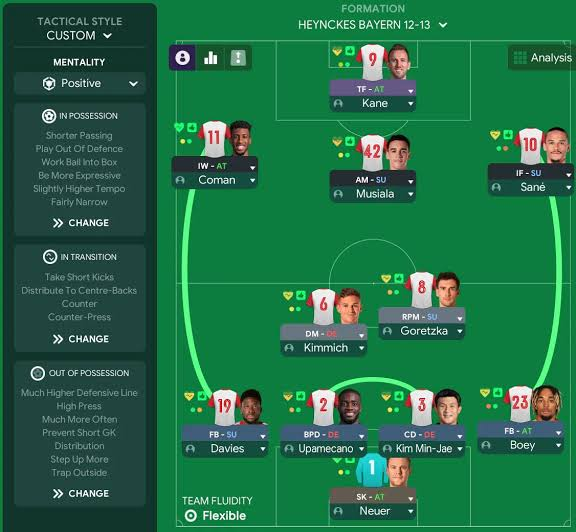
Relying purely on raw squad talent or surface-level motivation trends frequently betrays sports analysts when mapping out high-stakes betting positions. The 2012/2013 German Bundesliga campaign offers an exceptional template for value-based pre-match analysis because it featured a hyper-distinct clash of rigid tactical systems operated by highly dogmatic managers. By moving past standard form metrics and focusing intensely on how specific coaching philosophies systematically disrupt or enable opposing formations, smart bettors can uncover predictable match patterns long before the public market moves the odds.
Why Managerial Systems Provide a More Stable Baseline Than Player Form
Individual player form experiences intense weekly variance due to physical fatigue, minor knocks, and psychological fluctuations that remain hidden from public view. Conversely, a manager’s macro tactical identity—their preferred defensive line height, pressing triggers, and transition vectors—remains highly rigid because squad training revolves around perfecting these exact automated behaviors. When an analyst understands the mathematical space a specific tactical system naturally concedes, they can accurately forecast statistical outperformance independent of a team’s recent win-loss column results.
The Collision of Total Counter-Pressing and Possession Dominance
The tactical narrative of the 2012/2013 season was profoundly defined by the ongoing systemic rivalry between Jupp Heynckes’ clinical, balance-focused Bayern Munich and Jürgen Klopp’s aggressive, high-velocity counter-pressing (Gegenpressing) at Borussia Dortmund. Klopp’s system deliberately weaponized organized chaos, instructing players to press immediately upon losing possession to catch opponents while their defensive shapes were completely unorganized. Heynckes counteracted this structural vulnerability by integrating highly disciplined, double-pivot midfield shields that stabilized transitions, demonstrating that system matchups determine match outcomes far more decisively than individual star power.
To consistently outmaneuver opening bookmaker lines, data models must categorize managers by their systemic behavioral profiles rather than their league standings. The analytical table outlined below breaks down the foundational tactical parameters of four prominent managers during the 2012/2013 campaign, highlighting the predictable outcomes generated by their structural interactions.
| Manager & Club | Tactical Identity Classification | Defensive Block Height | Primary Attacking Vector | High-Probability Market Consequence |
| Jupp Heynckes (Bayern) | Positional Wing Overload | Medium-High | Asymmetrical Flank Directness | High Corner Volumes / Low Goals Conceded |
| Jürgen Klopp (Dortmund) | High-Velocity Counter-Press | Ultra-High | Immediate Central Verticality | High Match Totals / Frequent BTTS |
| Christian Streich (Freiburg) | Low-Budget Compact Mid-Block | Medium-Low | Rigid Lateral Counter-Transitions | Under Goals Lines / Spread Cover Value |
| Armin Veh (Frankfurt) | High-Risk Attacking Fluidity | Medium | Dynamic Attacking Midfielder Links | High Total Goals / Defensive Exposure |
Evaluating this distinct tactical matrix demonstrates why betting markets frequently mispriced matches involving mid-table teams that possessed elite coaching structures. Christian Streich’s SC Freiburg consistently outperformed their financial constraints because his ultra-disciplined mid-block systematically choked the space required by high-velocity transitional systems. Bettors who mapped out these structural friction points recognized that Freiburg was highly favored to cover positive point spreads against top-tier opponents who struggled to break down patient, deep defensive units.
The Spatial Mechanics of Formation Inefficiencies
Deconstructing the specific structural gaps inherent within contrasting shapes allows pre-match analysts to calculate exactly where a match will be won or lost on the pitch. When a manager commits to an aggressive attacking system that requires fullbacks to push deeply into the opposition half, they naturally leave vast corridors of open territory exposed on the flanks. Isolating these structural blind spots is the definitive key to identifying major pre-match pricing errors.
Fullback Advancement and Transitional Flank Vulnerability
The primary structural flaw of any high-possession attacking system is the space surrendered directly behind advancing fullbacks when a turnover occurs in the middle third of the pitch. If an opposing manager employs rapid, direct wingers instructed to immediately break into those specific corner channels, the central defenders are forced out of position to cover the wide space, systematically fracturing the core of the penalty box defense.
When evaluating an upcoming fixture to determine if a tactical mismatch justifies a heavy investment, analysts must run their data through a specific sequence of structural checks. The list below highlights the critical operational indicators that must be present before confirming that a managerial system matchup possesses high predictive value.
- The favored team’s coach demonstrates a historical unwillingness to alter his high defensive line when facing elite counter-attacking squads.
- The underdog manager utilizes a direct long-ball passing scheme that completely bypasses a favorite’s high-intensity midfield pressing trap.
- The match day referee maintains a low structural tolerance for physical challenges, which heavily penalizes high-pressing defensive systems.
- The structural fitness ratings of the favorite’s defensive midfielders show a distinct drop-off, undermining their ability to stop rapid counter-attacks.
Analyzing this combination of tactical indicators enables value bettors to confidently isolate matches where public favorites are highly prone to dropping points. When an over-aggressive attacking coach encounters a disciplined defensive tactician with the exact roster profiles needed to punish high lines, the opening market odds become heavily skewed in favor of the analytical bettor.
How In-Play System Adjustments Expose Live Market Lines
While pre-match analysis establishes the foundational baseline, the true elite edge develops when an analyst observes how stubbornly a manager sticks to his tactical principles once a match goes against his initial plan. Certain managers within the 2012/2013 Bundesliga structure lacked a viable tactical “Plan B,” meaning that if their initial pressing system failed to yield an early goal, they simply instructed their players to push higher up the pitch, drastically increasing their vulnerability. Recognizing these rigid behavioral loops allows live traders to secure massive value before the broader market recognizes the systemic collapse.
Capturing these fleeting mathematical advantages requires interacting with sophisticated wagering environments built for high-velocity execution. Observation of live liquidity movements implies that leveraging a highly responsive sports betting service like ufabet เว็บตรงไม่ผ่านเอเย่นต์ เว็บหลัก provides the immediate market access and diverse proposition options required to trade these tactical breakdowns in real time. Capitalizing on a manager’s predictable system panic during a live broadcast enables sharp analysts to secure heavily optimized prices on total goals or live handicap selections long before the bookmaker’s algorithms adjust for the tactical chaos unfolding on the pitch.
Avoiding the Trap of Prestige-Based Odds Anchoring
The single biggest hazard for value-driven sports modelers is the cognitive trap of anchoring a match prediction to a club’s historical prestige or the overall value of its playing roster. During the 2012/2013 campaign, high-profile clubs like Schalke 04 or VfB Stuttgart frequently suffered massive upsets because their managers deployed tactically naive systems that played directly into the hands of lower-tier, highly organized counter-attacking opponents. When bookmakers price a match based on global brand recognition rather than structural on-pitch compatibility, the value always resides with the side backed by superior tactical architecture.
To protect a growing capital base from the psychological variance inherent in sports trading, professional analysts decouple their funding strategies from individual match outcomes by viewing their wagers through a lens of pure statistical probability. Indirect reference without explicit connectors suggests that if an analyst manages their sports bankroll with the identical algorithmic discipline utilized to navigate the mathematical house edges of an elite casino online website, they can completely eliminate emotional bias from their operations. Treating every tactical mismatch as a recurring statistical trial ensures that short-term variance will never compromise the long-term mathematical yield generated by a superior model.
Structural Triggers That Terminate System Predictability
Even the most accurate tactical models encounter definitive boundary conditions where the predictive power of a manager’s system evaporates completely due to external squad friction. A primary failure case occurs when mid-season dressing room unrest or severe wage disputes cause players to intentionally lower their work rate, rendering high-intensity pressing metrics completely useless. Analysts must instantly remove a team from their system model if the tracking data reveals a sudden, uncharacteristic drop in collective running distance, as a system cannot function if the players refuse to supply the physical output required by the manager’s blueprints.
Summary
The complex operational landscape of the 2012/2013 Bundesliga season proved that reading manager tactics is the most reliable method for uncovering sustained pre-match and live betting value. By systematically mapping the structural interactions of high-line counter-presses against disciplined mid-blocks, sharp analysts successfully insulated themselves from the volatility of individual player form. Achieving consistent profitability in this arena depends entirely on isolating spatial inefficiencies, ignoring the deceptive noise of club prestige, and executing positions at the precise moment a manager’s tactical stubbornness exposes his squad to a devastating systemic defeat.
